Helios Ark
“The reach toward the stars is the most natural thing we do.”
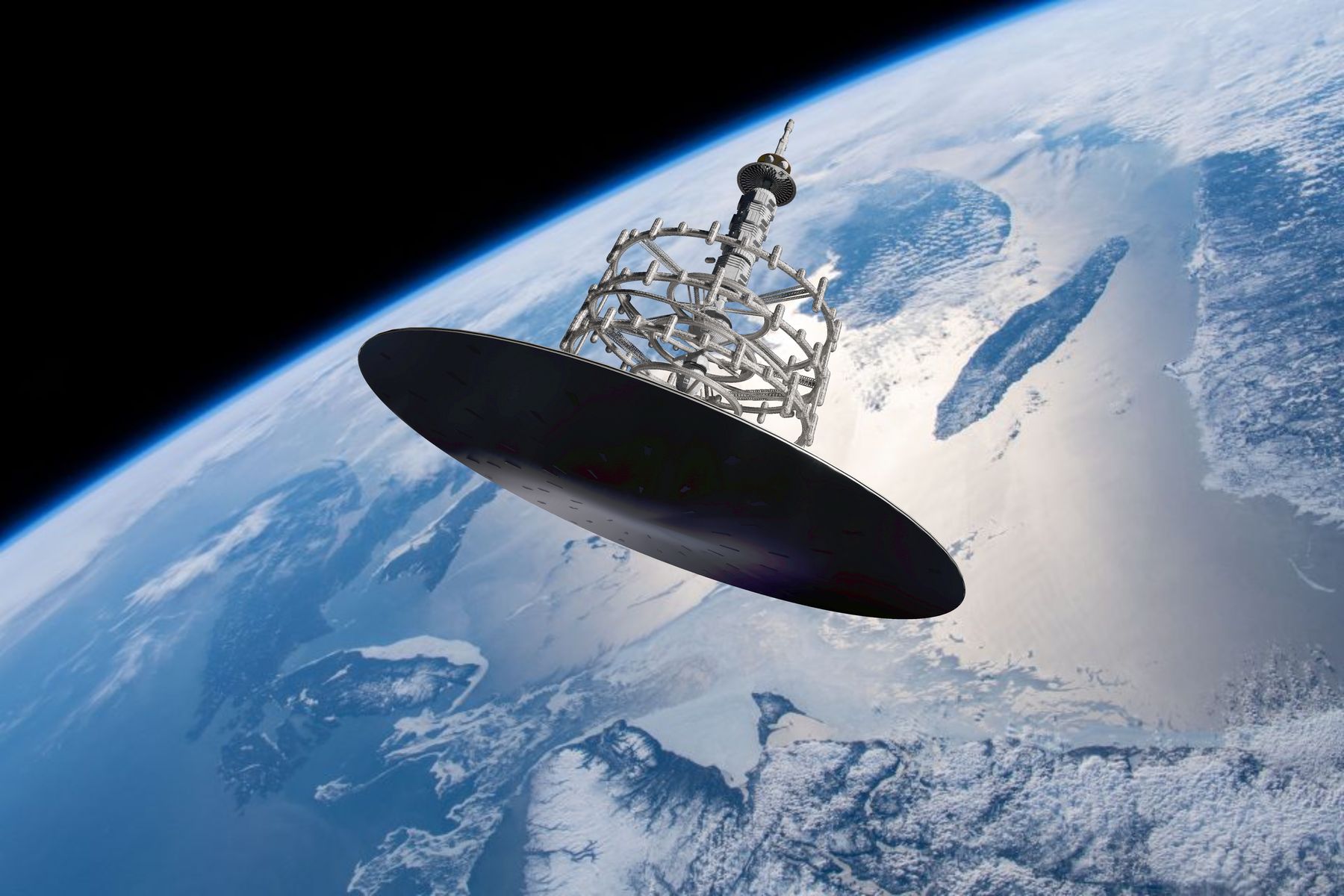
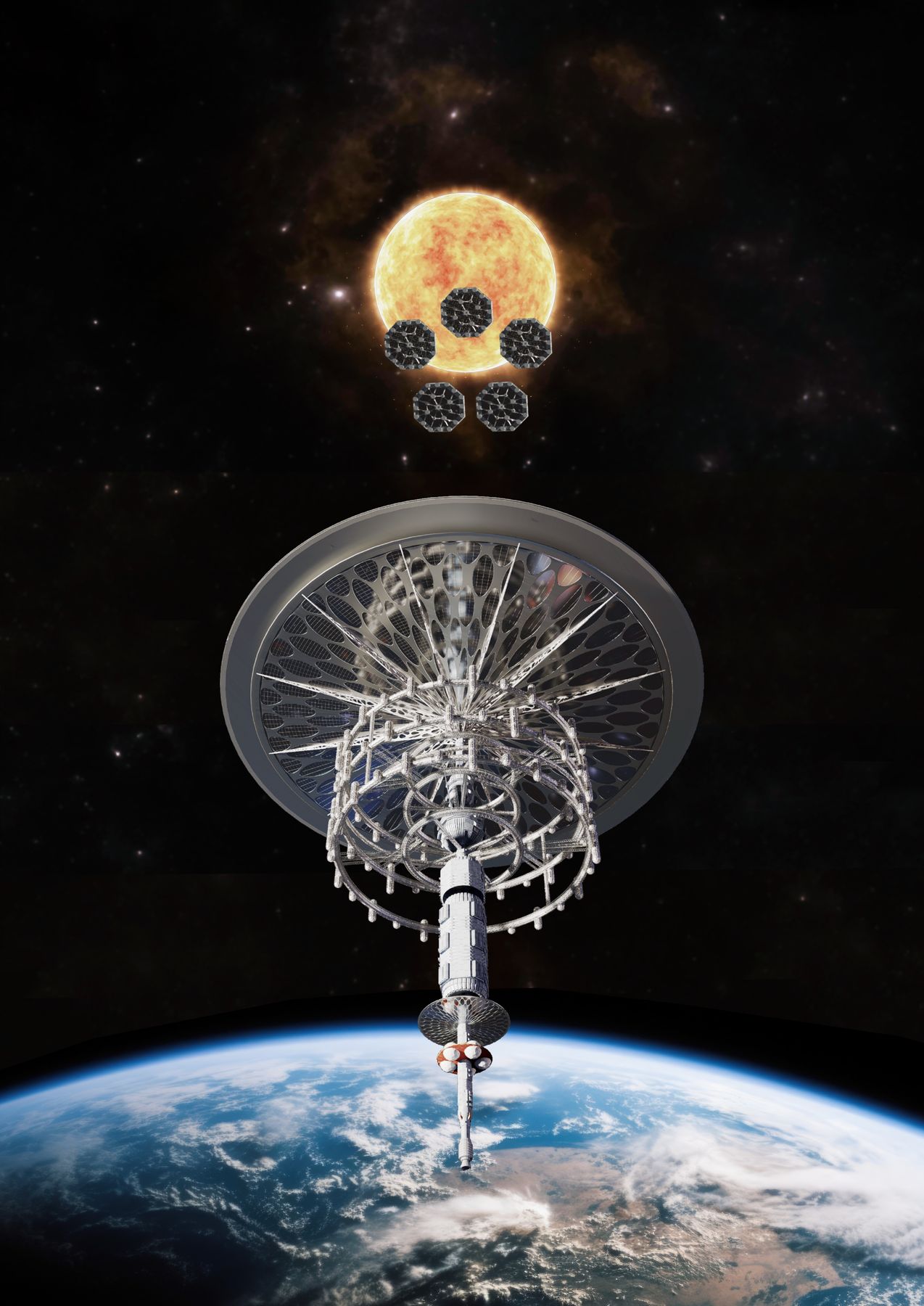
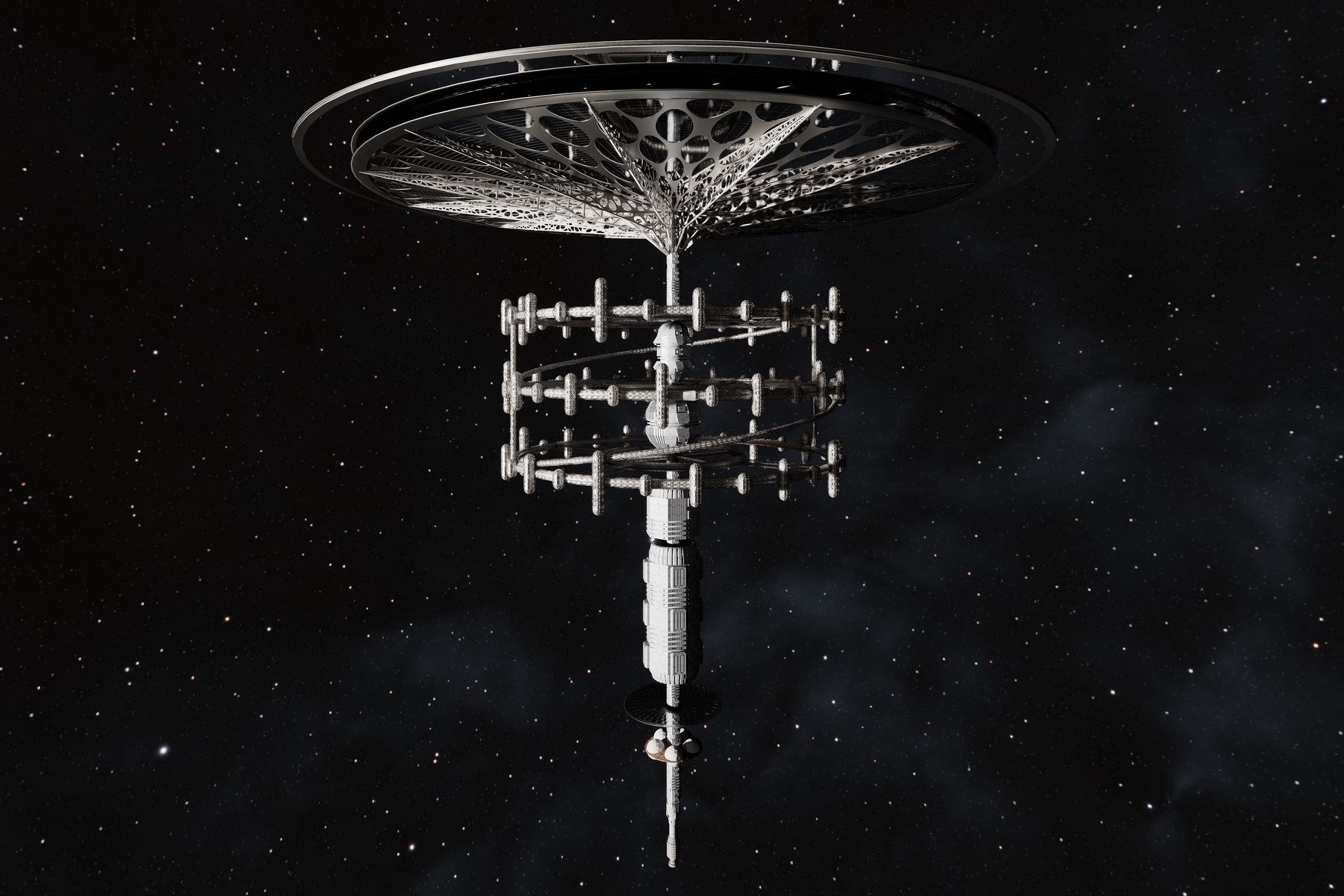
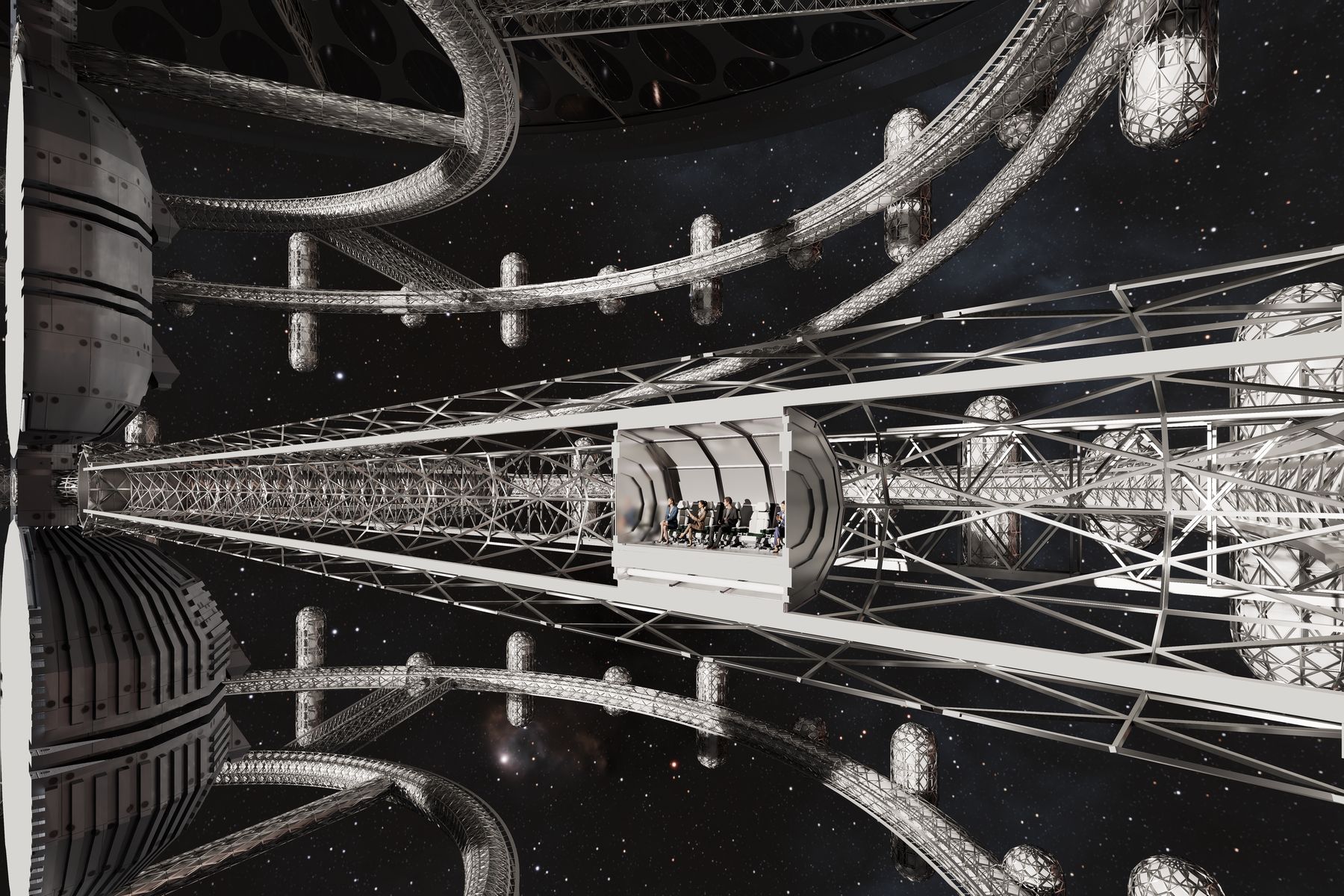
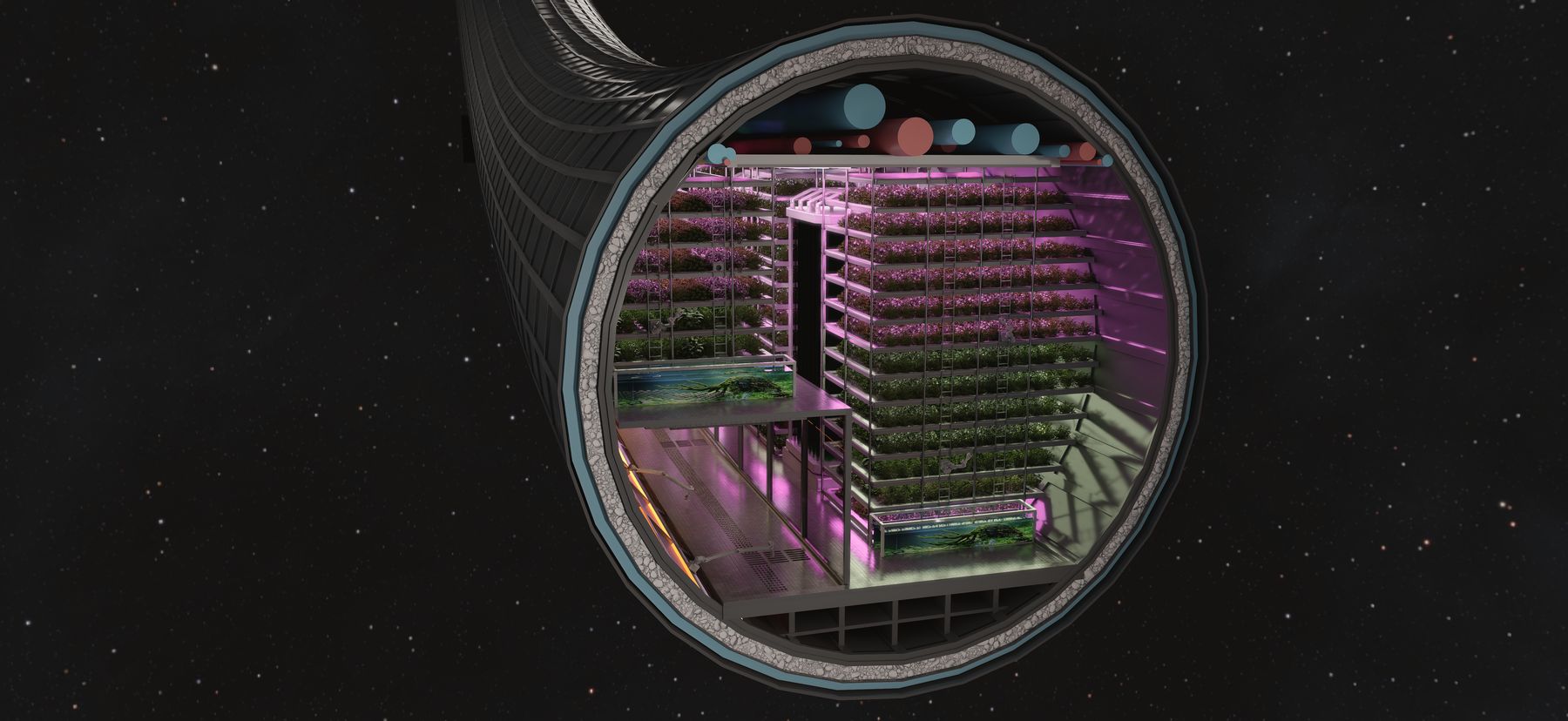
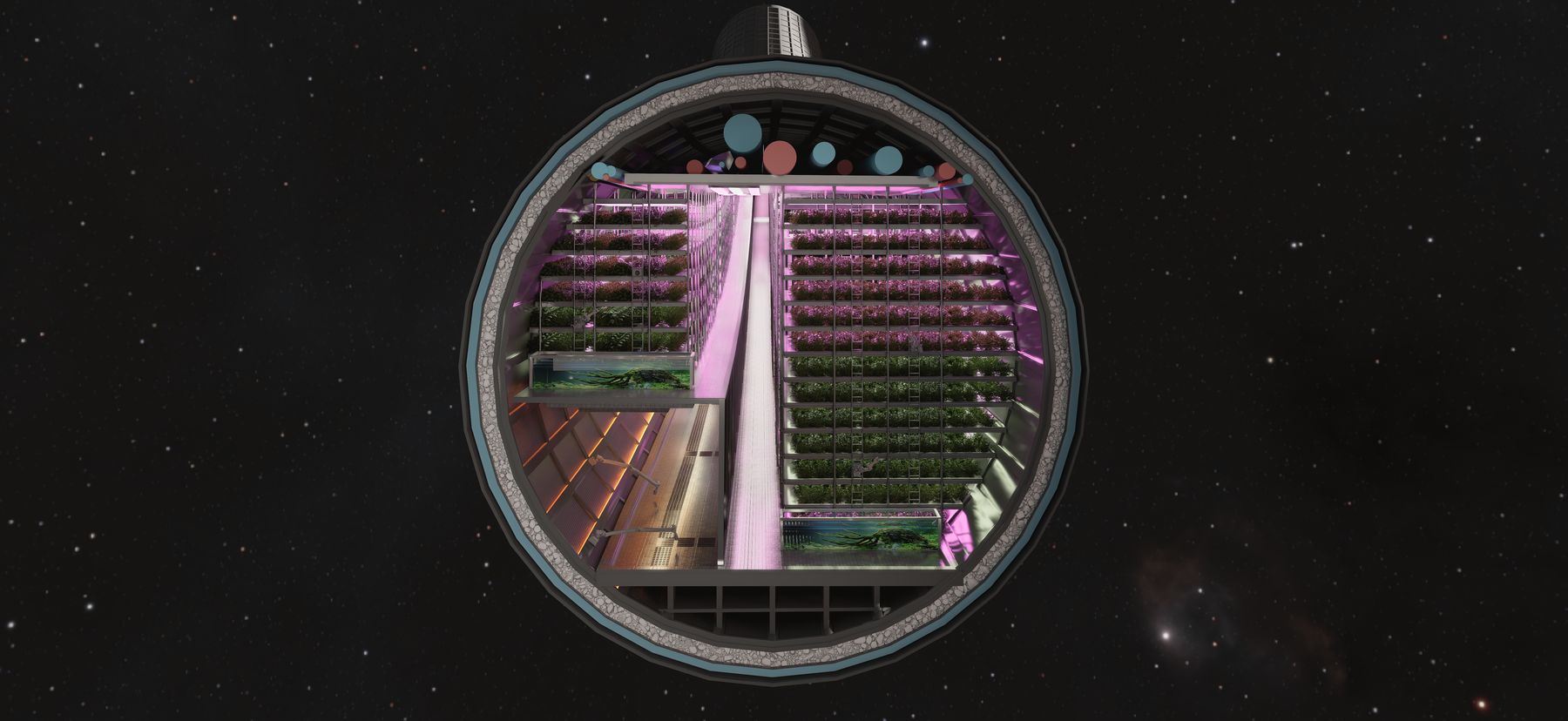
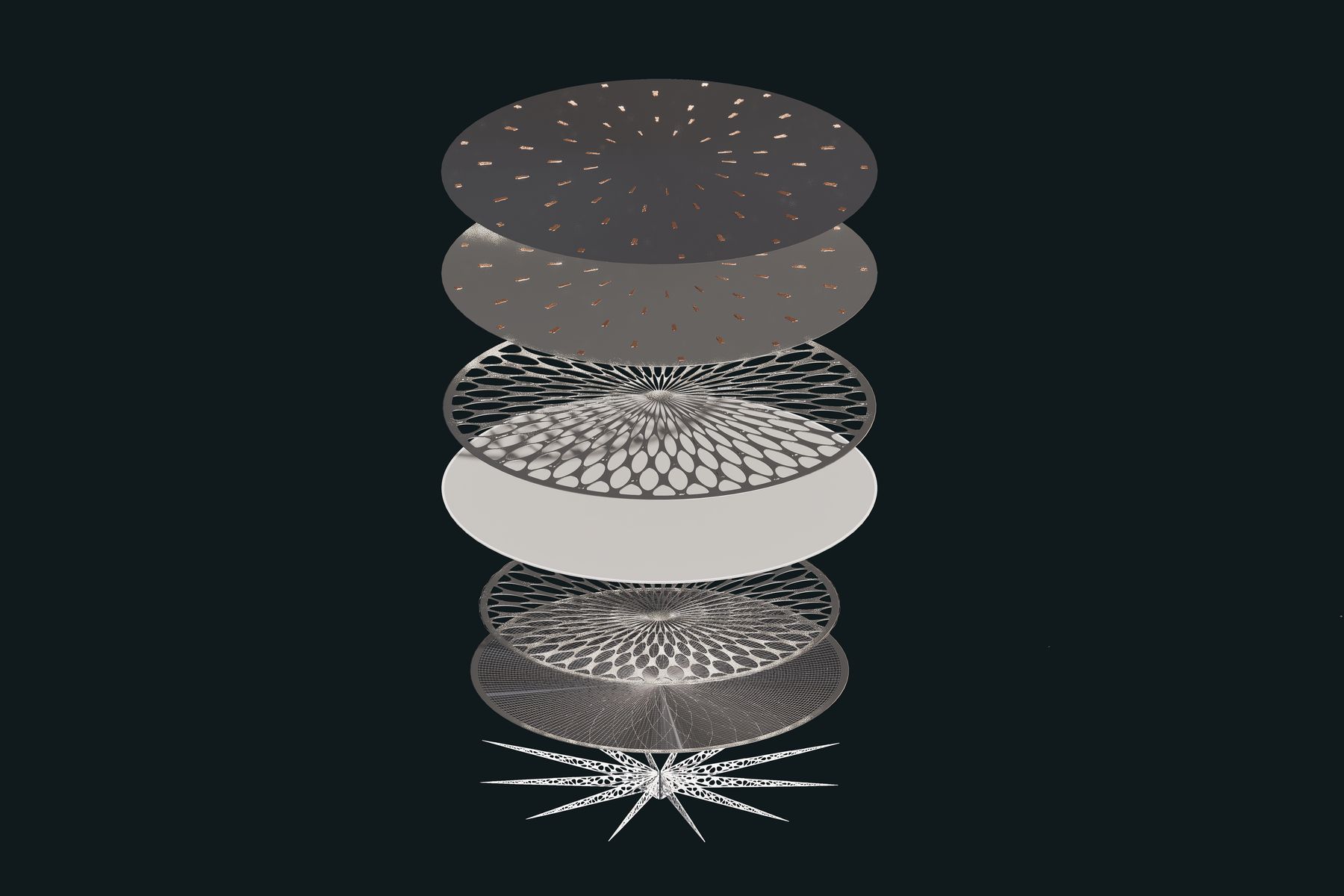
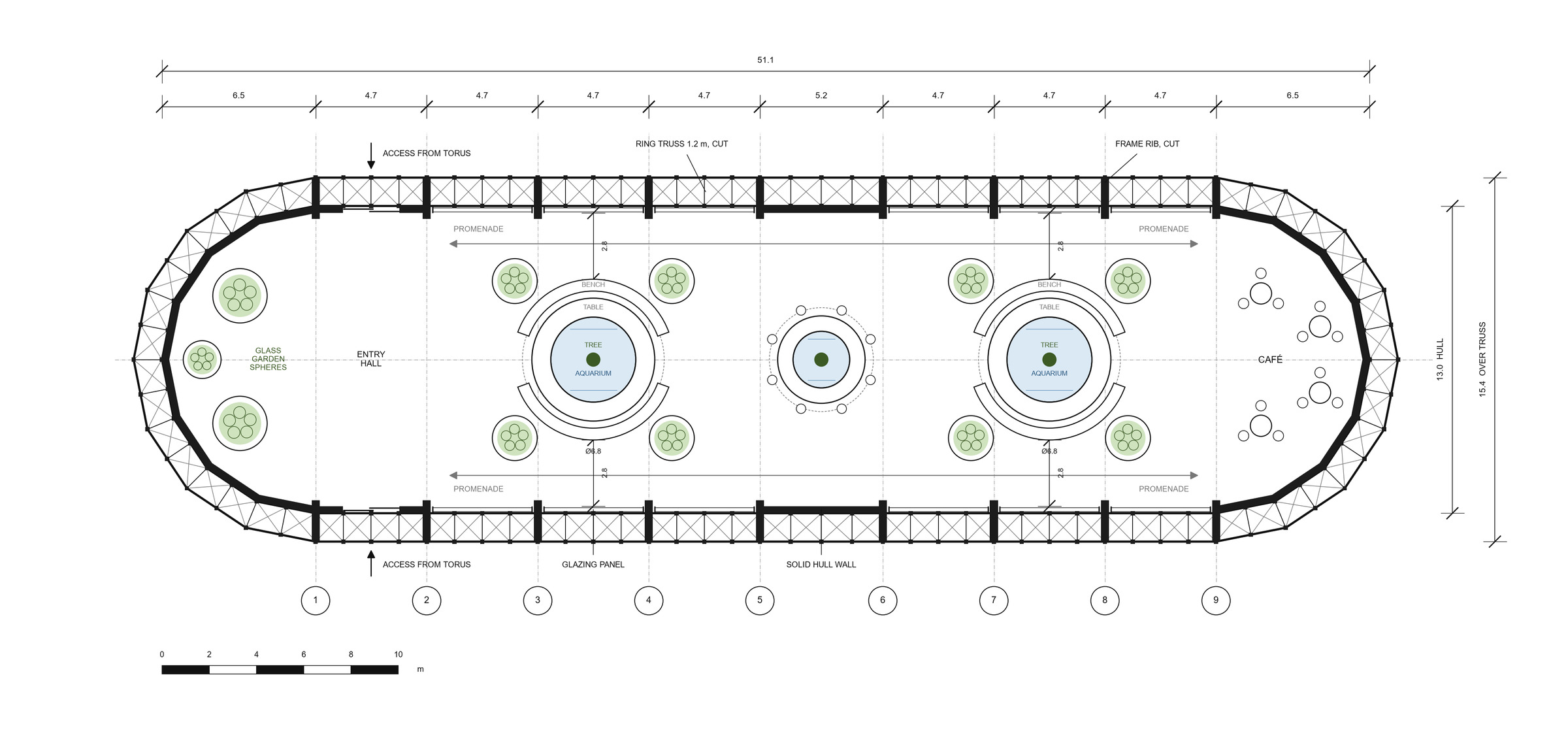
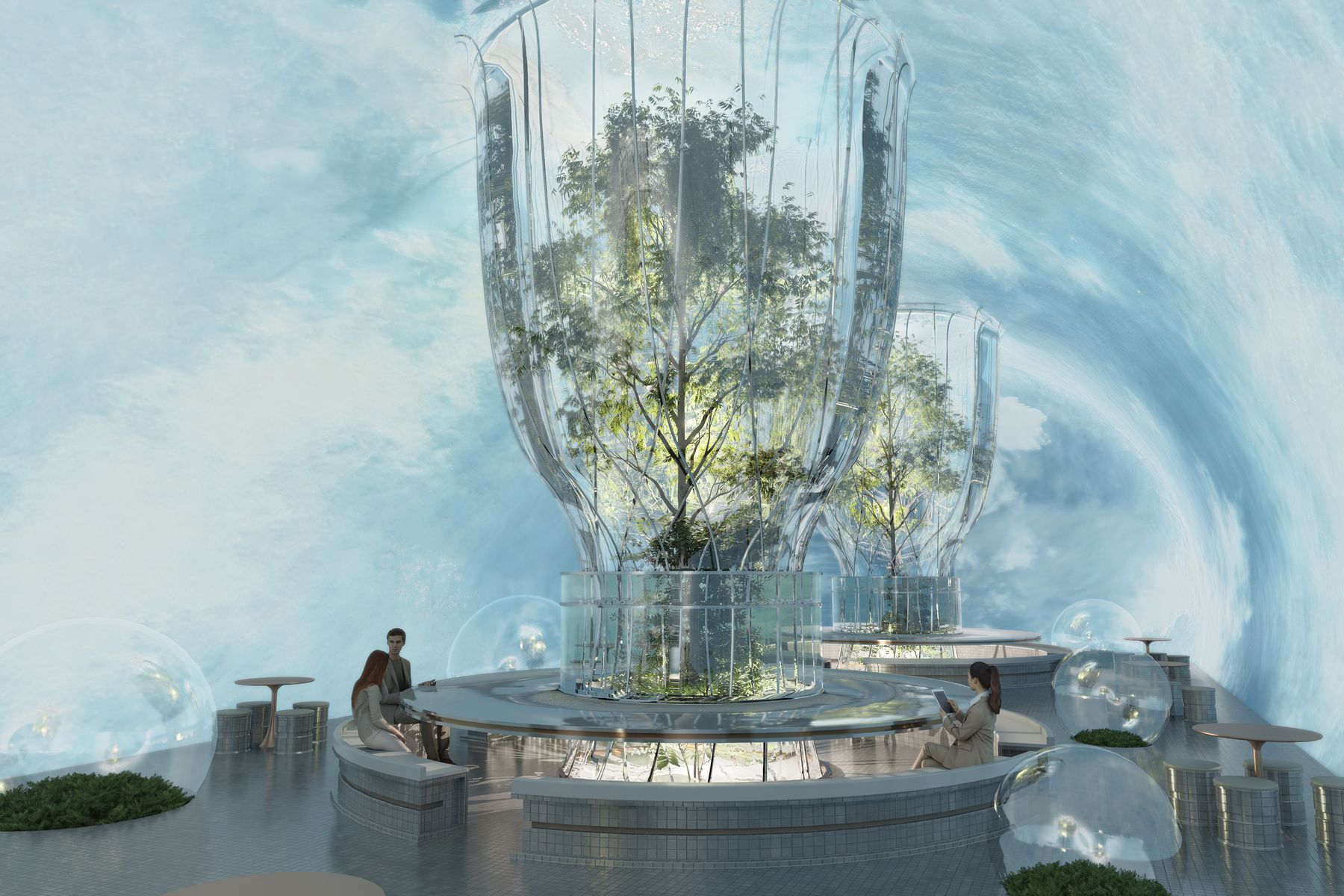
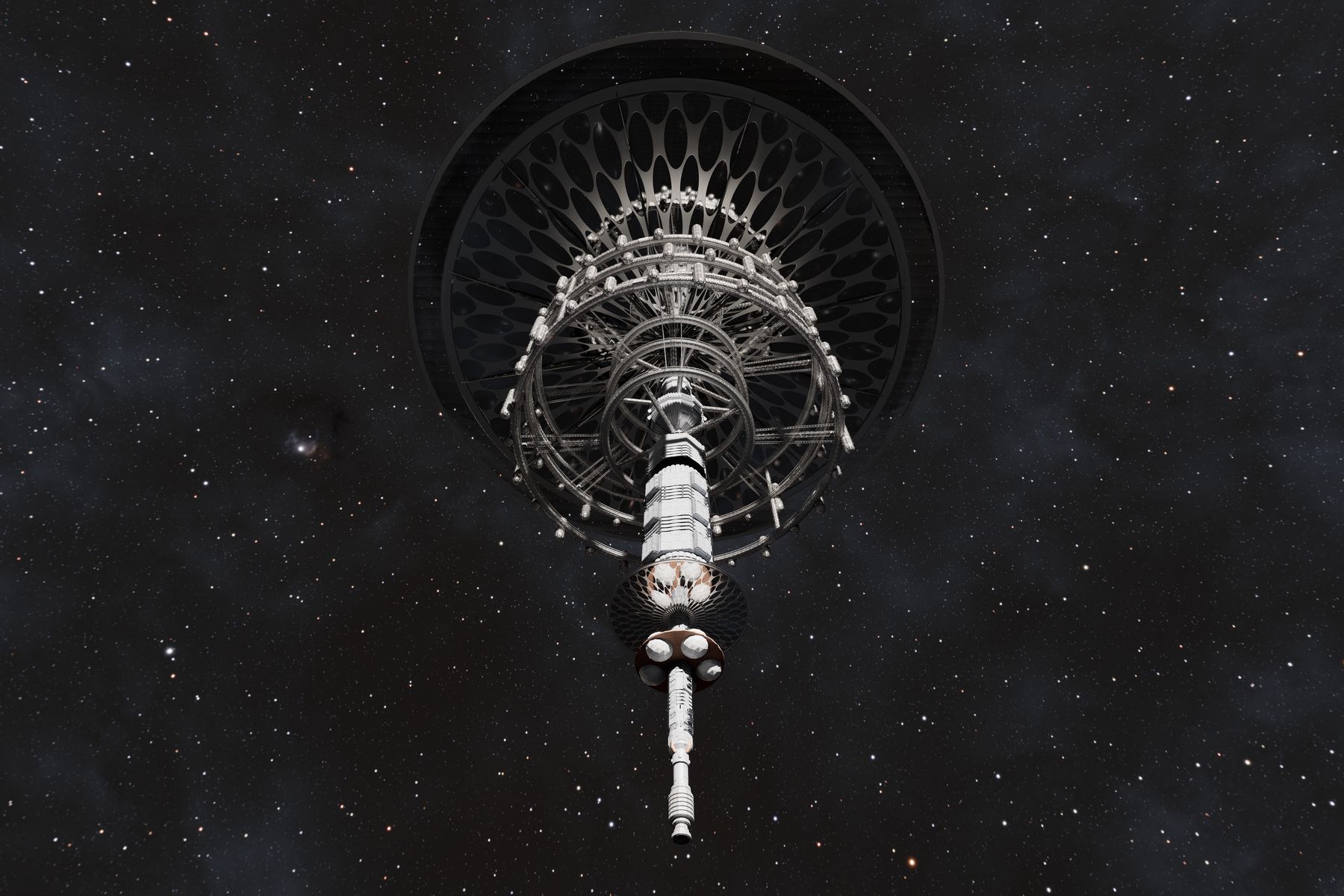
Helios Ark is a multigeneration ship carrying 1,000 people on a 250-year voyage to Proxima Centauri b, departing in 2100. Those who arrive will be the descendants of those who left, so the ship has to be a home, a village and a society for ten generations. Rotating toroidal habitats provide 1 g of artificial gravity and 155 m² per person around a microgravity core. Closed-loop life support recycles 99.9% of the water, vertical farms and aquaponics feed the crew, and a Whipple shield with an artificial magnetosphere protects against impacts and radiation. Architecture, technology and participatory governance are designed as one system, so that a society can live and evolve across generations.
- Destination
- Voyage to Proxima Centauri b
- Year
- 2024 to 2025
- Work
- Architecture lead
- Consortium
- Helios Ark was developed by a project consortium: the International Planetary Sunshade (IPSS) team at the Institute of Space Systems (IRS), University of Stuttgart; the social scientists at the University of Stuttgart; the team at the Technical University of Munich (TUM); and Jovana Stojković (AD ASTRA), who led the architecture and visualisation.
- Recognition
- Among the ten best designs of the Project Hyperion Challenge 2025.
- Presented
- 76th International Astronautical Congress (IAC) 2025, Sydney.
- Conference paper
- HELIOS ARK: A Multigenerational Interstellar Spaceship for Humanity's Next Frontier. Paper IAC-25-A5.4.5, pages 146 to 156 of the congress proceedings, published by the International Astronautical Federation.ResearchGateDOI 10.52202/083078-0016
- In the press
- Bild, July 2025